
Gold jewelry turning black is common and almost always fixable at home. The blackening is a surface buildup of skin oils, lotions, or chemicals, not a change in the gold itself. Cleaning removes it in most cases. Our Abercrombie’s gold care team, who evaluate gold at our Westlake showroom, can help when home cleaning isn’t enough.
Why Gold Jewelry Turns Black
Understanding the cause helps you choose the right fix, and we can help prevent it from recurring.
Skin chemistry is the most common cause. Body oils and sweat contain compounds that react with the alloying metals in gold, and we consider this the most common cause. Most gold jewelry is not pure gold. It’s a mixture of gold with copper, silver, and zinc to add strength. Those alloy metals oxidize when they come into contact with certain body chemistry, producing dark surface discoloration. This is especially common with lower-karat pieces like 10K and 14K, which have more alloy metals than 18K or 22K gold.
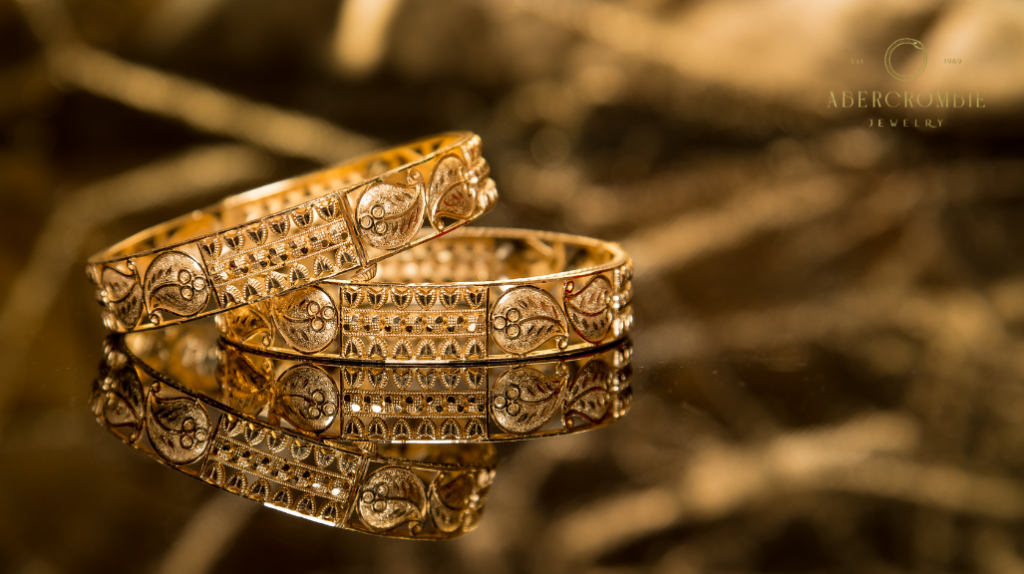
Chemical exposure accelerates the process significantly. Chlorine from pools and hot tubs is particularly aggressive toward gold alloys. Bleach, sulfur compounds in rubber bands and latex, and even some cleaning products can cause rapid blackening on contact. We hear this often: clients notice blackening after swimming or after wearing rings while cleaning.
Lotion and product buildup contribute to the dark residue that collects in settings and around stones. Perfume, sunscreen, hand sanitizer, and hairspray all leave residue that accumulates over time, creating a dark film that appears as discoloration.
Lower-karat gold is more prone to blackening because it contains more alloy metals, and that’s a chemistry reality we can’t change. A 10K ring (41.7% gold, 58.3% alloy) will darken more readily than an 18K ring (75% gold, 25% alloy) under the same conditions.
When Blackening Is NOT Surface Buildup
Before cleaning, check for a few signs that the blackening may be more than surface grime.
If the blackening is localized inside the ring band where it sits against your finger and doesn’t appear on the visible parts, it’s almost certainly an alloy reaction from your skin chemistry. This is normal and cleanable.
If the blackening appears specifically around a stone setting, it may be tarnish from a base metal used in the setting or prong material. Some older or mixed-metal settings contain silver or base metals that tarnish more readily than the gold itself.
If the piece is stamped GP, GF, or GE rather than a karat number, it’s gold-plated rather than solid gold, and we’d want to identify that before any cleaning attempt. Gold plating wearing through can expose the dark base metal underneath, which looks like blackening but isn’t. Cleaning won’t fix this; the plating would need to be renewed. Our gold karat testing team, which confirms the actual metal composition of any piece through professional testing, can tell you exactly what you’re dealing with before you spend time cleaning.
If you recently purchased a ring and it’s blackening unusually fast, the karat may not be what it was represented as. Lower-karat gold sold as higher-karat gold is uncommon among established retailers, but it does occur in private sales and on online marketplaces. Professional testing confirms the actual gold content.
Cleaning Methods That Work
For genuine surface blackening on solid gold, these methods effectively restore the finish.
Mild dish soap and warm water are the safest and most reliable options. We recommend mixing a small amount of dish soap with warm water in a bowl. Soak it for 10 to 15 minutes, then use a soft toothbrush to gently scrub the surface, paying attention to the inside of ring bands, around stones, and in any textured areas. Rinse thoroughly under warm running water, then dry completely with a lint-free cloth.
Baking soda paste works for more stubborn discoloration. Mix baking soda with a small amount of water to form a paste. Apply it with a soft toothbrush, scrub gently, and rinse completely. Don’t use baking soda on pieces with pearls, opals, or porous stones; they don’t tolerate it.
Rubbing alcohol on a cotton swab is effective for localized dark spots and product residue; it’s a quick option we often suggest. It evaporates quickly and doesn’t leave residue.
Ammonia-based solutions clean gold effectively but require care. Mix one part clear ammonia with six parts water. Soak the piece for no more than one minute, scrub with a soft brush, and rinse completely. Never use it on pieces with pearls, soft stones, or pieces with adhesive settings.
What NOT to Use
Some common suggestions cause more damage than they fix.
Toothpaste is a frequent recommendation online that jewelers universally advise against. Most toothpastes are abrasive enough to scratch gold, particularly lower-karat pieces, and the scratches aren’t reversible without professional polishing. The scratches may be minor, but they accumulate over time.
Bleach is extremely damaging to gold alloys. We see the results of this regularly. Even a brief exposure can cause rapid and severe discoloration or structural damage at karat joints and solder points. Never clean jewelry with bleach, and we’d extend that to any chlorine-based cleaner.
Ultrasonic cleaners are effective in professional settings but risky at home for pieces with loose stones, cracks, or older settings. The vibrations can dislodge stones or worsen existing damage.
When to Bring It In
Home cleaning addresses surface buildup, but several situations warrant professional attention.
Persistent blackening that returns within days of cleaning usually means the underlying cause is chemical rather than simple buildup. Our gold polishing specialists, who professionally polish and clean gold at our Westlake showroom, can address oxidation that home cleaning can’t reach and advise on whether the piece needs a different approach.
Blackening accompanied by a rough or pitted surface suggests alloy corrosion rather than surface tarnish. This is a structural issue that professional assessment addresses. Our jewelry repair specialists, who evaluate pieces for both structural integrity and cosmetic condition, can tell you whether the piece can be restored or if the damage is more significant.
Antique gold pieces with blackening should be evaluated before any cleaning. Patina on Victorian and Edwardian goldwork is part of the piece’s character and can carry collector value. Removing it permanently can reduce the piece’s appeal to collectors. Our period gold evaluators, who assess antique pieces before any cleaning recommendation, can tell you whether cleaning or preservation is the better path.
When Blackening Leads to Selling
Cleaning sometimes reveals that a piece has more problems than its surface appearance suggests. A ring that blackens quickly, has worn prongs, and has been repaired several times may simply have reached the end of its useful life.
If you’re evaluating whether to clean, restore, or sell a gold piece, our Westlake buyers, who evaluate gold in any condition and give you a clear offer before you decide anything, can tell you exactly what the piece is worth on the secondary market. Sometimes that number makes the decision obvious.
For inherited gold jewelry that’s blackened from years in storage, our inherited jewelry buyers, who handle full estate lots and evaluate each piece individually, give you an assessment of what’s worth cleaning, what’s worth keeping, and what’s better sold outright.
Prevention Going Forward
Once a piece is cleaned, a few habits prevent rapid re-blackening.
We recommend removing gold jewelry before swimming, showering, and doing housework. Chlorine, sulfur in hot water, and cleaning chemicals are the primary culprits in accelerated blackening.
We also suggest putting jewelry on last when getting ready. Perfume, lotion, hairspray, and other products should go on first and dry before jewelry is added. The less product contact, the slower the buildup.
Store gold jewelry individually. Contact between pieces can cause micro-scratches that increase oxidation surface area, and we see this regularly in estate collections. Small pouches or compartmented boxes extend the time between cleanings.
Wipe gold jewelry down with a soft cloth after wearing. A quick pass removes skin oils and sweat before they’ve had time to react with the alloy metals.
Have pieces professionally cleaned and inspected annually. Our platinum cleaning specialists, who also handle gold maintenance at our Westlake showroom, perform annual inspections that catch worn prongs and developing issues before they become expensive problems.