There aren’t two engagement rings. There are two different rings in a bridal set: the engagement ring given at the proposal, and the wedding band exchanged at the ceremony. They’re worn stacked on the same finger. Our Westlake buying team, who purchase both, can tell you what either piece is worth.
The Engagement Ring
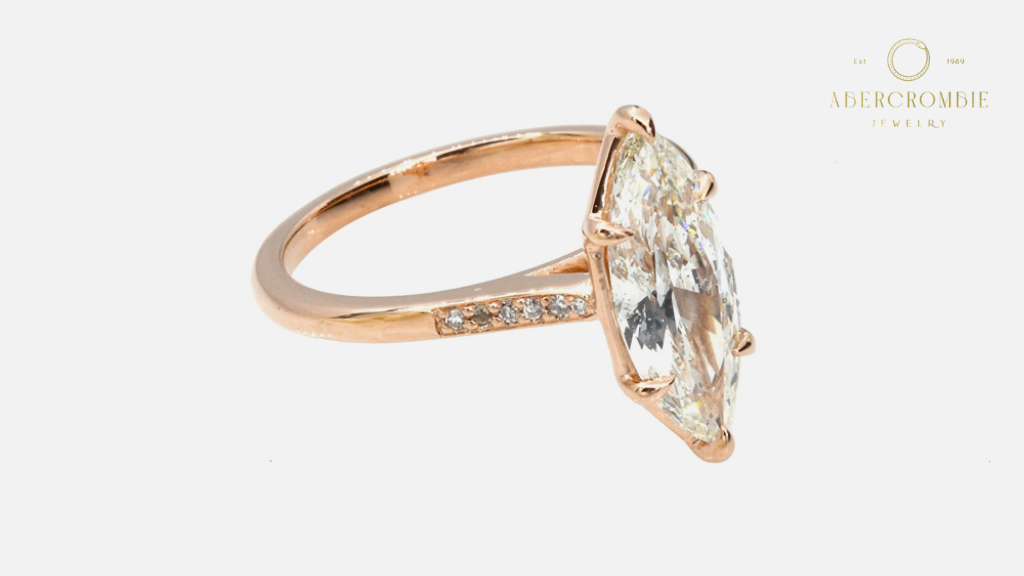
The engagement ring is the piece given during the proposal. It marks the beginning of the betrothal period and is typically the more prominent of the two rings. Most engagement rings feature a center diamond or gemstone set into a metal mounting, such as platinum, white gold, yellow gold, or rose gold. The center stone is the primary value driver, though the quality of the setting and the metal content also factor into both the retail price and the resale value.
The tradition of a diamond engagement ring in the United States is largely a 20th-century development. Diamond marketing campaigns in the mid-century period established the diamond solitaire as the expected format, and that expectation has persisted. European and older American traditions included a wider range of gemstones. Antique engagement rings from the Victorian and Edwardian eras frequently feature sapphires, rubies, and pearls alongside diamonds, often in elaborate gold or platinum settings that carry significant collector value today.
The Wedding Band
The wedding band is the ring exchanged during the ceremony. Its purpose is ceremonial and symbolic; it marks the completion of the marriage. Wedding bands are typically simpler than engagement rings: a plain metal band, a pavé diamond band, or a band styled to complement the engagement ring.
Many couples choose matching or coordinating wedding bands. Some choose bands that nest against the engagement ring, with a contoured shape that fits the profile of the engagement ring’s setting. Others choose simple bands that stand alone.
Wedding bands come in gold, platinum, silver, and various alloys. Our wedding band buying team, which purchases gold and platinum bands in any condition, evaluates them separately from engagement rings, since the metal type and weight drive the offer for plain bands.
Why They’re Worn Together
After the wedding ceremony, most people wear both rings stacked on the left ring finger, with the wedding band closest to the hand and the engagement ring on top. The reasoning is partly traditional, the wedding band goes on first to sit closest to the heart, and partly practical, since the engagement ring’s setting can sometimes snag if worn alone on the bottom of a stack.
Some people choose to solder the two rings together after the wedding so they’re moving as a single unit. Some wear them on separate hands. The actual arrangement is a personal choice, and there’s no binding convention.
What Happens to the Rings When Couples Sell
This is where we’re most useful. Clients come to us with engagement rings and wedding bands for several reasons: upgrading to a larger stone, clearing an estate, separating after a marriage ends, or simply deciding the rings no longer reflect their style.
For the engagement ring, the value is primarily in the center stone. Our engagement ring selling team, who examine the diamond and the mounting separately, present both values before making any offer. The diamond’s cut, color, clarity, and carat weight drive the stone portion of the offer. The metal, typically white gold or platinum, contributes its own melt value separately.
For the diamond specifically, if you’d prefer to sell it as a loose stone, we can assess whether removing it from the setting increases the offer. Our loose diamond buyers, who evaluate unmounted stones across all quality ranges, sometimes find that a stone performs better as a loose sale than as part of a complete ring.
For the wedding band, the offer depends on what it is. A plain 14K gold band is priced on metal weight and spot pricing. Our gold band buyers, who calculate offers from confirmed karat and weight, give you an immediate offer the same day. A pavé diamond band has both a metal value and a stone value. A platinum band is evaluated by our platinum ring buyers, who test its purity and weigh the piece before making an offer.
Both rings can be evaluated in a single appointment. You don’t need to schedule separately or research the rings beforehand. We identify the metal, grade the stone, and explain our findings before presenting any offer. Most bridal set evaluations take 20 to 30 minutes for a matched pair. If you’re also bringing other jewelry from the same estate or household, we handle everything together.
When the Bridal Set Has Collector Value
Antique and vintage bridal sets are a separate category from modern ones. A matched engagement ring and wedding band from the Art Deco period, both in platinum with original millgrain and filigree intact, has collector value well beyond its material weight. The pair being matched adds to that value.
Our diamond ring resale services cover modern and antique rings equally, but for truly significant period pieces, we recommend bringing them in for evaluation before assuming the offer is primarily a metal-and-stone calculation. Our vintage bridal jewelry team, which evaluates mid-century and retro bridal sets against collector demand, often finds period pieces worth significantly more than their material weight. The collector market for intact period bridal sets in original condition is active, and we price them based on what collectors are actually paying.
Selling vs. Consigning a Bridal Set

For modern bridal sets, an outright immediate sale is usually the right path. The secondary market is liquid, and offers are available the same day.
For high-quality or period pieces, consignment can sometimes yield a better outcome by connecting the piece with a collector specifically looking for that style. Our bridal consignment program, which places select pieces in our Westlake showroom and markets them to buyers actively searching for that category, is worth discussing if your set has significant period or designer value.
We’ll tell you during the evaluation which path makes more financial sense. We’ve had this conversation with hundreds of Austin clients, and it’s always the same: there’s no pressure to decide on the spot. There’s no pressure to decide anything on the spot.
Insurance and Appraisals for Bridal Sets
If you’re keeping the rings and want formal documentation for insurance purposes, our bridal jewelry appraisal, available by appointment at our Westlake showroom, produces a certified replacement-value document covering both pieces. This is separate from the free verbal evaluation we provide to every client.
Insurance appraisals are written at retail replacement cost, which is typically significantly higher than secondary market value. Both numbers are accurate for their respective purposes. If you’re unsure which number you need, we’ll explain the difference clearly before any service is requested.
Upgrading a Bridal Set
A common reason clients bring in bridal jewelry isn’t a separation or estate clearance; it’s an upgrade. After 10 or 20 years, many couples want a larger center stone, a different setting style, or a refreshed band to mark an anniversary. Selling the existing set of funds is part of the new purchase.
When you’re upgrading, the evaluation process is the same as any sale. We assess the current set, give you a clear offer, and you can apply that toward whatever comes next. Some clients upgrade only the engagement ring and keep the original band for sentimental reasons. Others sell both and start fresh. We buy either configuration.