Most diamond rings lose 25 to 50 percent of their retail price when resold. That gap exists because retail prices include store markups that don’t transfer to secondary buyers. Our Westlake showroom team, who explain this distinction and give you an accurate resale number before you decide on anything.
Why Retail Price and Resale Value Are Different Numbers
A diamond ring purchased at a national jewelry chain or a luxury brand boutique carries a retail price that reflects far more than the stone’s intrinsic value. The gem itself, the gold or platinum setting, and the craftsmanship account for a portion of what you paid. The rest covered the retailer’s rent, payroll, advertising, and margin. None of that transfers to a resale buyer.
This is why a ring purchased at full retail price might receive an offer of 30 to 50 percent of what was paid in the secondary market. That’s not a bad offer; it’s simply what the stone and setting are worth to a buyer without the retail markup.
Insurance appraisals make this confusing for many sellers. A jewelry appraisal written for insurance purposes reflects the replacement cost at retail, which is what it would cost you to buy a comparable piece today in a store. That number can be 2 to 3 times what the piece would sell for in the secondary market. Both numbers are accurate for their purposes. They measure different things.
What Actually Determines Resale Value
Once you understand the markup gap, the more useful question is what drives resale value within the secondary market. Several factors move the needle meaningfully.
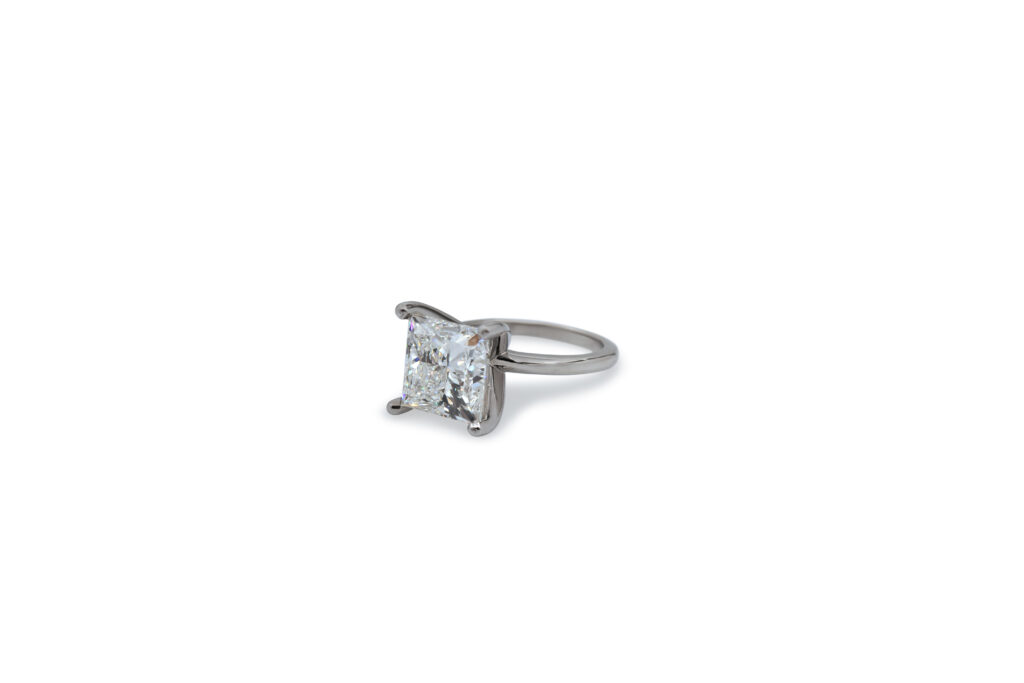
Stone quality is the primary driver. Cut, color, clarity, and carat weight determine what our diamond valuation team pays for any stone. A well-cut, colorless, eye-clean stone in the one-carat range holds its resale value significantly better than a comparably priced ring with a heavily included or poorly cut stone. Quality doesn’t depreciate the way retail markup does.
GIA documentation helps, but doesn’t create value. A GIA grading report confirms the stone’s grade to a buyer without requiring them to take your word for it. It speeds the sale and can support a slightly stronger offer on high-quality stones. But the grade is what it is, regardless of the paper; the document confirms what we find under magnification. It doesn’t change it.
Carat weight matters for resale more than most sellers expect. Stones above one carat hold value better than smaller stones because demand concentrates at the larger sizes. A 1.5-carat stone doesn’t fetch 50 percent more than a one-carat stone of similar quality; it often fetches significantly more because fewer of them exist, and buyer demand is strong.
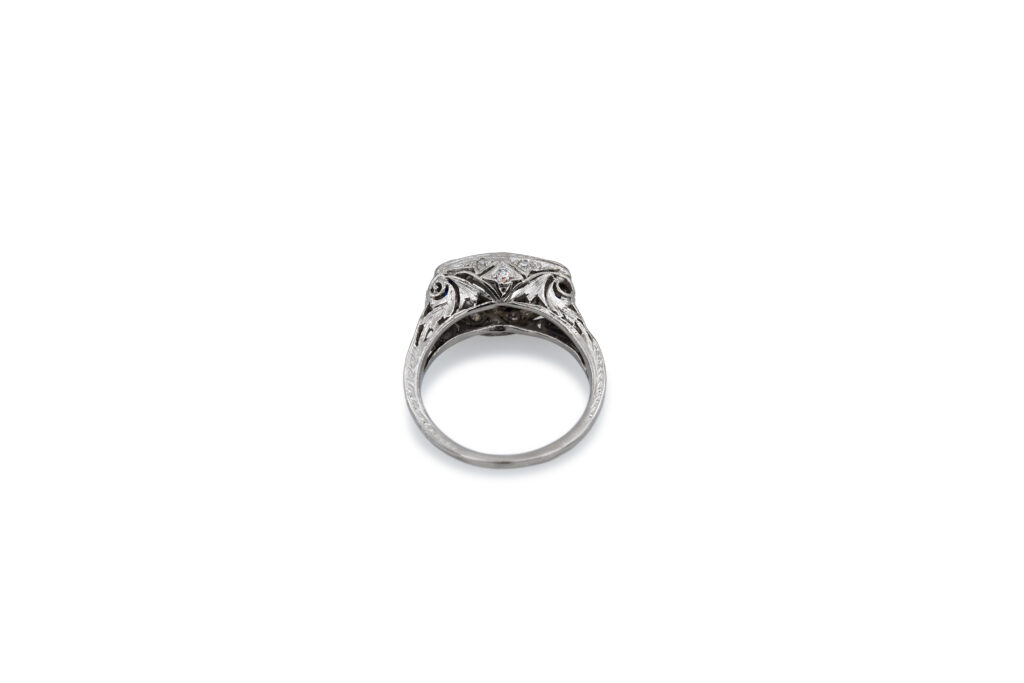
The setting’s metal contributes separately from the stone. Gold and platinum settings have their own melt value calculated against live spot pricing. A substantial platinum mounting from the Art Deco era, for example, can carry real value both in metal content and period design. Our gold mounting buyers, who evaluate the metal independently of the stone, present both values before any offer.
When Diamond Rings Appreciate in Value
Some categories of diamond rings do appreciate over time, or at least hold value more reliably than modern retail jewelry.
Old European-cut and old mine-cut diamonds have seen sustained collector demand over the past decade. These cuts predate modern brilliant standards and produce a different kind of fire and warmth that collectors and dealers actively seek. A well-preserved old European cut diamond in a platinum Edwardian ring often sells for more today than it would have ten years ago. Our antique diamond evaluators, who price these stones against current collector demand rather than modern brilliant-cut equivalents, make a meaningful difference in the offer.
Mid-century and retro jewelry from the 1940s through the 1960s has similarly seen increasing collector interest. Signed pieces from known designers command premiums that can substantially exceed the material value. Our vintage diamond evaluation team, who assess signed pieces and era-specific design alongside the stone and metal, frequently find that a mid-century diamond ring is worth more as a period artifact than it would be at melt-plus.
Large stones in exceptional grades tend to hold and occasionally appreciate because supply is genuinely constrained. Diamonds above two carats in high color and clarity grades are rare enough that market demand can push prices upward over long periods.
The Honest Picture for Most Sellers
For most sellers, a diamond engagement ring purchased within the past 10 to 20 years from a retail jeweler will sell in the secondary market for 30 to 60 percent of its original retail price. The exact figure depends on the stone’s quality, carat weight, documentation, and current market conditions.
That’s not ideal, but it’s how the market works. Understanding it helps you make a rational decision about when to sell and what offer to accept.
A few things that won’t change the offer much: the retailer’s brand you bought from, the original receipt, and the amount you paid. A buyer cares about what the stone is. They’re not factoring in what you paid, not what you paid for it.
Sell Outright or Consign?
For most standard diamond engagement rings, an immediate, outright sale is the right decision. The secondary market for common engagement ring configurations is liquid; there are buyers, offers come quickly, and holding it doesn’t typically produce a better market outcome.
Consignment makes sense when the piece has specific appeal to collectors: an old European-cut diamond in its original period mounting, a signed designer piece, an unusually large stone, or a ring with provenance that adds value. Our diamond consignment program, which places select pieces in our Westlake showroom and markets them to buyers actively searching for that category. We’ll tell you during the evaluation whether your ring is a strong consignment candidate. We don’t push toward either outcome; we give you the information and let you decide.
Getting an Accurate Picture of What Your Ring Is Worth
The fastest way to know what your diamond ring will sell for is to bring it in for an evaluation. We examine the stone under magnification, assess the metal, review any documentation you have, and provide a clear offer. We don’t pressure you to decide on the spot.
If you’re not ready to sell but want to know the resale value for estate planning or insurance context, that’s a legitimate use of our evaluation, too. Many clients come in simply to understand what they have. Our estate evaluation team provides you with the same thorough assessment, whether you decide to sell.
For clients who need a formal written valuation, our formal diamond appraisal services are available by appointment at our Westlake showroom. A written appraisal produces a documented valuation useful for insurance, estate, or legal purposes, separate from the complimentary verbal evaluation every client receives.