Selling a diamond ring starts with understanding what the offer is actually based on: the diamond’s quality grades, the metal content, and the current market for each. Neither what you paid at retail nor what an insurance appraisal says translates directly to a secondary market offer, and we explain that distinction clearly.
- The Four Things That Drive a Diamond Ring Offer
- What the Secondary Market Pays vs. What You Paid at Retail
- Choosing the Right Buyer
- When Period or Designer Value Exceeds Melt
- Should You Repair Before Selling?
- Selling Alongside Other Jewelry
- What to Bring
- What the Evaluation Process Looks Like
- Frequently Asked Questions
The Four Things That Drive a Diamond Ring Offer
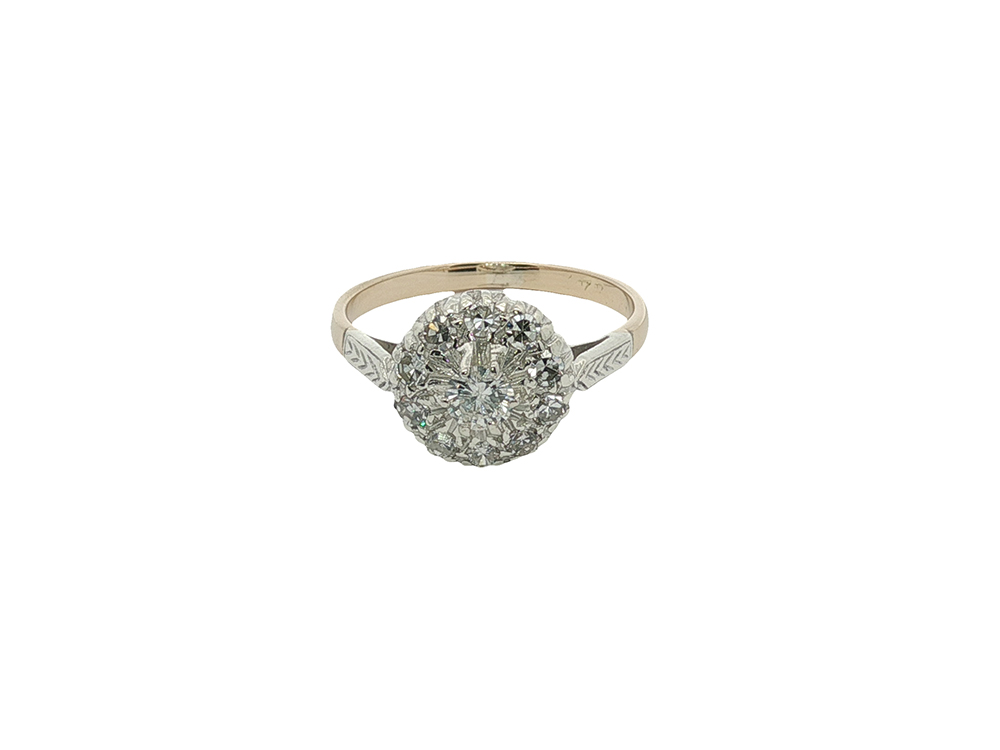
Every secondary market offer on a diamond ring is built from four inputs. Understanding each one before you walk into any buying appointment gives you a solid baseline for evaluating what you receive.
The center diamond’s quality grades. Cut, color, clarity, and carat weight together determine a diamond’s value in the secondary market. Cut quality affects brilliance and is often underweighted by sellers who focus on carat size. Color runs from D (colorless) through Z (visible yellow), with colorless and near-colorless stones commanding strong premiums. Clarity reflects inclusions and blemishes, with eye-clean stones carrying meaningful value above heavily included ones. Carat weight matters, but the relationship isn’t linear; demand for stones above one carat is strong, and prices reflect that concentration of demand.
Our diamond evaluation team, which examines every stone under magnification and directly assesses all four factors, provides a grade-by-grade breakdown before any offer is presented.
The metal content. The ring mounting adds value independently of the diamond. A 14K gold mounting weighing 4 grams has a calculable melt value based on current gold spot pricing. A platinum mounting is weighed and priced separately at the current spot price of platinum. We calculate both and present each value separately so you understand what each component contributes.
GIA certification. A GIA grading report confirms the diamond’s characteristics to a buyer without requiring a direct trust relationship. For a high-quality stone, a GIA certificate can support a measurably stronger offer by eliminating ambiguity about the grade. It’s not required; we evaluate every stone directly regardless of documentation, but it helps with significant diamonds.
Current spot pricing. Gold and platinum prices fluctuate daily. We check live spot pricing before every calculation and can provide the current rate upon request. An offer made today reflects today’s market, which is the only fair basis for a transaction.
What the Secondary Market Pays vs. What You Paid at Retail
This gap surprises most sellers the first time they encounter it, and understanding it before you go in prevents frustration.
Retail diamond ring prices include the cost of the diamond, the mounting, and the retailer’s overhead, labor, design, marketing, and profit margin. Depending on the retailer, that markup runs from 100 to 400 percent above the cost of the materials. None of that markup transfers when you sell.
A ring purchased at retail for several thousand dollars will typically sell in the secondary market for 20 to 50 percent of the original retail price. That’s not a bad offer, and it’s accurate; it reflects what the materials are worth as a commodity. The difference is the retail markup, which pays for the experience of buying in a store, and that experience doesn’t resell.
Insurance appraisals add another layer of confusion. An insurance appraisal reflects retail replacement cost, which is what you’d pay to buy a comparable ring today. That number can be two to three times the secondary market value. Both numbers are accurate for their purposes. They measure different things, and we explain the distinction clearly before any offer is discussed.
Choosing the Right Buyer
The type of buyer you choose affects the outcome as much as the ring’s quality.
Pawn shops are the lowest-returning option for diamond rings. They buy across hundreds of categories and can’t maintain the specialized knowledge to evaluate diamond quality precisely. Their margins account for uncertain hold times before resale. You’ll receive a fraction of what a specialist buyer offers.
Online diamond platforms allow you to sell directly to another consumer. The upside is potentially higher returns for ideal-quality stones. The downside is time, the challenge of communicating quality without physical inspection, the risk of fraud, and uncertainty about when and whether the sale will close.
Specialist jewelry buyers evaluate the piece directly, explain the offer, and pay the same day. Our diamond ring evaluation team, which handles both the stone and the mounting and explains each value separately, gives you a clear number before you commit to anything.
When Period or Designer Value Exceeds Melt
Some diamond rings are worth more than their material value to the right buyer, and a specialist evaluation catches those premiums.
Antique diamond rings from the Victorian, Edwardian, and Art Deco periods carry collector value above their melt value. An old European-cut diamond in an original Art Deco platinum mounting, with intact milgrain and filigree, is worth more to collectors than its material weight suggests. Our antique diamond evaluators, who price period pieces against current collector demand, assess those premiums before any offer.
Mid-century and vintage diamond rings similarly carry collector interest when the design and construction are intact. Our vintage diamond buyers, who evaluate signed and unsigned mid-century pieces against what collectors are actually paying, give you an accurate picture of the secondary market for those categories.
Designer-signed pieces from major houses command brand premiums in the secondary market. A signed Tiffany, Cartier, or Harry Winston ring attracts buyers who’re specifically seeking that brand, and the offer reflects that demand.
Should You Repair Before Selling?
Generally, no. The cost of prong re-tipping, stone replacement, or other repairs rarely comes back in added resale value. We evaluate the ring in its current condition, and we’ll tell you during the appointment whether any repair would meaningfully affect the offer. In most cases, selling as-is is the better financial path.
If the ring has a loose stone that risks falling out before the evaluation, bring it in immediately. We can evaluate a ring even with a displaced stone, and we’ve done it many times. and the condition doesn’t prevent a fair offer. Our ring repair team, which assesses repair value before any sale, can advise during the same appointment.
Selling Alongside Other Jewelry
If you’re clearing an estate or selling multiple pieces, we handle everything during a single appointment. Our inherited diamond buying team, which regularly processes full estate collections across gold, platinum, diamonds, silver, and coins in a single session, evaluates each piece individually and presents a per-category breakdown.
You don’t need to sort the collection before bringing it in, and we’d encourage you not to. Bring what you have, and we’ll work through it systematically.
What to Bring
Bring the ring. If you’ve got a GIA certificate, bring that too. If you have a prior appraisal, it’s useful context, but it doesn’t determine our offer. If the ring came with original packaging or brand documentation from a major house, bring that as well. None of it’s required, but it helps us give you the most accurate offer.
We’re open Monday through Thursday, 10:00 to 5:30, and Friday, 10:00 to 5:00 at 3008 Bee Caves Rd, Suite 100. For estate collections or multiple pieces, calling ahead at (512) 328-7530 ensures we have adequate time. You can also review our full buying process on our ring evaluation page.
What the Evaluation Process Looks Like
We start with the diamond. The stone is placed under magnification, and we assess cut quality, color grade, clarity grade, and carat weight directly. For cutting, we look at the stone’s proportions and light performance. For color, we compare the stone against known reference grades. For clarity, we map the inclusions visible under 10x magnification. All of this takes 5 to 10 minutes for a standard solitaire.
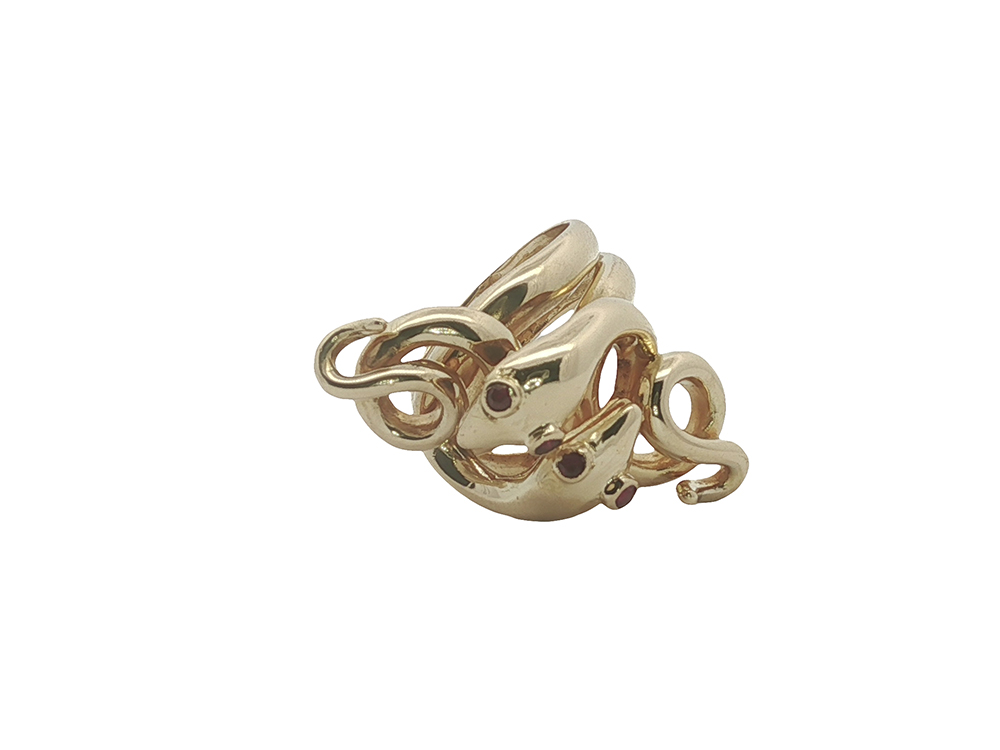
We then examine the mounting. For pieces alongside watches or silver, our watch buying team. We confirm the metal type through testing, weigh the piece on a precision scale, and check the current spot price. The calculation from those three numbers is straightforward, and we show it to you before presenting any offer.
For the offer itself, we combine the diamond and metal values. We’ll present both separately so you understand each component, and give you time to think without pressure. Same-day payment if you accept. No obligation if you don’t.