Retail gold jewelry typically carries a markup of 100 to 300 percent above the melt value of the gold itself. That markup pays for labor, design, overhead, and margin, and none of it transfers when you sell. Our Abercrombie’s gold pricing team, who explain every component before presenting any offer, can tell you exactly what your gold is worth today.
Why Retail Markup Is So High
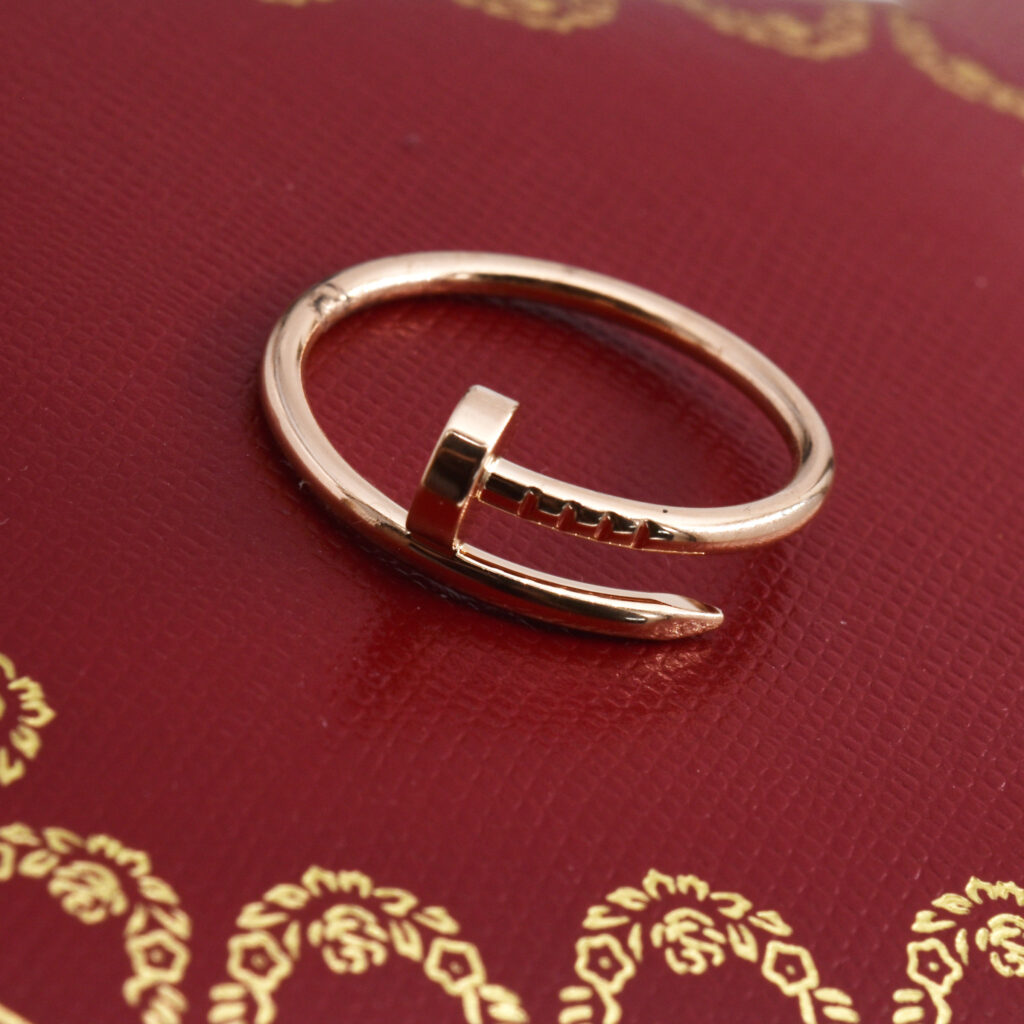
Gold jewelry retail pricing reflects everything it costs to bring a piece from raw material to a display case. The gold itself, often called the melt value, is only one component. Here’s what else drives the retail price.
Labor and fabrication. Casting, setting, finishing, and quality control all cost money, and they’re not cheap. A simple gold band requires less labor than a multi-stone halo ring with hand-engraved shoulders. Complex fabrication adds cost that shows up in the retail price.
Design and licensing. Brand-name pieces carry premiums for the name itself. A Tiffany gold band and an independently made gold band of identical metal content and weight may have very different retail prices. The brand commands a premium at the point of sale that bears no relation to secondary market value.
Retailer overhead. Rent in a premium retail location, staff, insurance, display cases, and advertising all factor into the margin. Mall jewelry chains and luxury boutiques price accordingly. Even independent jewelers carry meaningful overhead that’s built into the price.
Inventory and carrying cost. Gold purchased at wholesale and held in inventory has a carrying cost. The retailer is tying up capital in stock that may sit for months before it is sold. That cost factors into the markup.
The net result is that most retail gold jewelry carries a markup of 100 to 300 percent above melt value, with higher markups on branded pieces, complex fabrication, and lower-karat jewelry, where alloy costs are lower, but labor costs are the same.
What Markup Means When You’re Selling
This is the part most sellers don’t fully understand before they bring a piece in for evaluation.
When you sell gold jewelry to a buyer, the buyer is purchasing the material content, the gold, the diamonds, the platinum. They are not purchasing the brand, the original craftsmanship, the retail display experience, or any of the overhead that drove the original retail price. The secondary market offer is built on what the piece actually contains and priced against the current commodity market.
This means a ring purchased at retail for 2,000 dollars will typically sell in the secondary market for 400 to 800 dollars, and that’s not a bad offer, depending on the gold content, the diamond quality, and the current spot price. It’s an accurate reflection of the piece’s value as a material asset, stripped of all retail markup that doesn’t transfer.
Insurance appraisals make this even more confusing, and we regularly see sellers frustrated by this gap. A jewelry appraisal written for insurance purposes reflects replacement value, which is what it would cost to buy a comparable piece at retail today. That number can be two to three times the secondary market value. Both numbers are legitimate for their intended purpose, and we’re always happy to explain the difference. They measure different things. An insurance appraisal tells you what it would cost to replace the piece. A buyer’s offer tells you what the piece is worth as a commodity.
Our jewelry selling process, which starts by clearly explaining this distinction, helps sellers make better decisions about whether to sell, when to sell, and what offer to accept.
How Melt Value Is Calculated
Melt value is the baseline for every secondary market offer. It’s calculated from three numbers: the gold’s karat, the piece’s weight in grams, and the current spot price of gold.
14K gold is 58.3 percent pure gold. If a 14K ring weighs 5 grams, the pure gold content is 2.915 grams. Multiply that by the current spot price of gold per gram to get the melt value. At current market levels, that’s typically in the range of $ 175 to $ 250 for a 5-gram 14K piece, depending on the day’s spot price.
18K gold is 75 percent pure gold and carries proportionally more value per gram. The difference between a 14K and an 18K piece of the same weight is meaningful, roughly 29 percent more gold content.
Our gold melt buyers, who confirm the karat through professional testing and check live spot pricing before any calculation, show you the melt value before presenting an offer so you can see exactly what’s driving the number.
What Moves the Offer Above Melt
The melt calculation is the floor, not the ceiling. Several factors move the actual offer above that baseline.
Diamond and stone quality. Diamonds aren’t priced at melt; they’re evaluated individually on cut, color, clarity, and carat weight. A ring with a significant center diamond may be worth substantially more than its gold content alone. Our diamond resale evaluators, who examine stones under magnification before making any offer, provide the stone value separately from the metal so you understand both components.
Period and collector value. Victorian, Edwardian, and Art Deco gold pieces carry collector premiums above their melt value when the design and construction are intact. A 1920s Art Deco platinum ring with original filigree is worth more than its weight in platinum. Our antique gold pricing specialists, who assess period pieces against current collector demand, don’t price them at melt value.
Intact wearable condition. A piece in excellent wearable condition may command a premium over pure scrap value if a buyer can resell it at retail rather than melt it. The margin is modest but real for clean, desirable pieces.
Consignment for the right pieces. For significant antique pieces, signed designer jewelry, or large diamonds, consignment can outperform an immediate sale. Our gold consignment program, which places select pieces in our Westlake showroom and markets them to collector buyers, is worth discussing for pieces with genuine collector appeal.
The Gap Between Appraisal and Offer
The most common source of sellers’ disappointment is the gap between an insurance appraisal and a secondary-market offer. If you’ve been told your ring is worth 3,000 dollars by an appraiser and a buyer offers you 800, both numbers can be completely accurate.
The appraiser wrote a replacement value appraisal: what it would cost to buy a similar ring at retail today. Our retail appraisal services, which produce replacement-value documents for insurance purposes, are appropriate for that use. But a replacement value appraisal is not what a buyer pays. A buyer pays for the material content of the piece at current commodity pricing.
Understanding this gap before you walk in puts you in a much better position to evaluate any offer you receive. An offer that’s 40 percent of the appraisal value isn’t necessarily unfair, and it’s often completely accurate. It may be completely accurate. And an offer that’s 10 percent of the appraisal value deserves a second opinion.
What Jewelers Pay vs. What They Sell For
Here’s the retail economics in plain terms. A jeweler manufacturing a 14K gold ring might pay a gold supplier 200 dollars for the raw material. Labor, overhead, and margin add another $ 400 to $ 800. The ring sells at retail for $ 700 to $ 1,200.
When that ring comes back to the secondary market five years later, the buyer pays for the $ 200 worth of gold, plus whatever adjustments apply for diamonds, condition, and period value. The 400 to 800 dollars of labor, overhead, and margin that went into the original retail price don’t come back. They were the cost of the retail experience, not the cost of the material.
For estate jewelry where pieces have been held for decades, this math sometimes works in the seller’s favor. Gold prices have risen significantly over long periods. A ring purchased in 1985 for 800 dollars may contain gold worth more at current spot prices than the original purchase price, independent of any collector value the design carries. Our estate gold evaluation team, which regularly handles inherited collections, assesses both the current melt value and any collector premium that applies to older pieces.
Selling Gold Jewelry in Austin
When you bring gold jewelry to our Westlake showroom, the process is straightforward, and we don’t rush any part of it. We test the metal to confirm the karat. We weigh the piece. We check the live spot price. We examine any stones. We present the offer with a breakdown of every component. You decide at your own pace, and there’s no pressure to accept on the spot.
For estate collections that include gold alongside diamonds, silver, watches, and coins, our diamond and gold resale team, which handles every category in a single appointment, evaluates gold and stones together. For diamond rings specifically, our ring resale specialists evaluate the stone and the mounting separately and provide you with both numbers.
We’re open Monday through Thursday, 10:00 to 5:30, and Friday, 10:00 to 5:00 at 3008 Bee Caves Rd, Suite 100. Walk-ins are welcome, or call (512) 328-7530 to schedule.