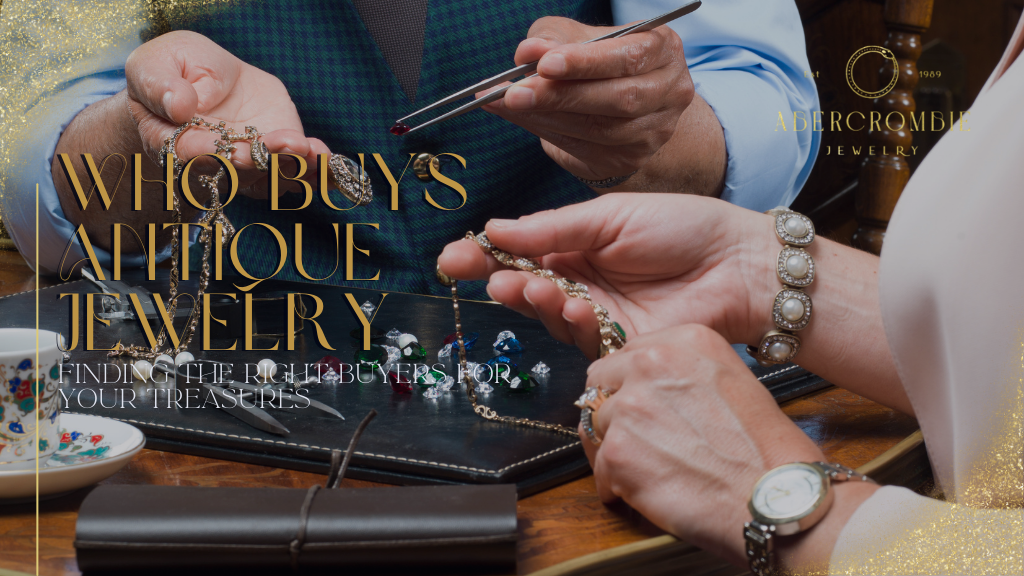
Specialist jewelry buyers who understand the period collector market are the right buyers for antique jewelry, and there’s a meaningful difference in outcome. Generic buyers, pawn shops, and gold-by-weight operations price antique pieces at melt value, missing the collector premium intact period pieces command.
- Why the Buyer Matters More for Antique Jewelry
- Who Buys Victorian Jewelry
- Who Buys Edwardian Jewelry
- Who Buys Art Deco Jewelry
- Who Buys Mid-Century and Retro Jewelry
- Signed and Designer Antique Jewelry
- What to Bring and What to Expect
- Practical Information Before You Visit
- Ready to Have Your Antique Jewelry Evaluated?
- Frequently Asked Questions
Why the Buyer Matters More for Antique Jewelry
For a plain gold chain or a standard modern diamond ring, the difference between buyers is primarily their offer as a percentage of melt value. The piece is what it is: a known weight of a known metal, and the range of offers reflects buyers’ margins.
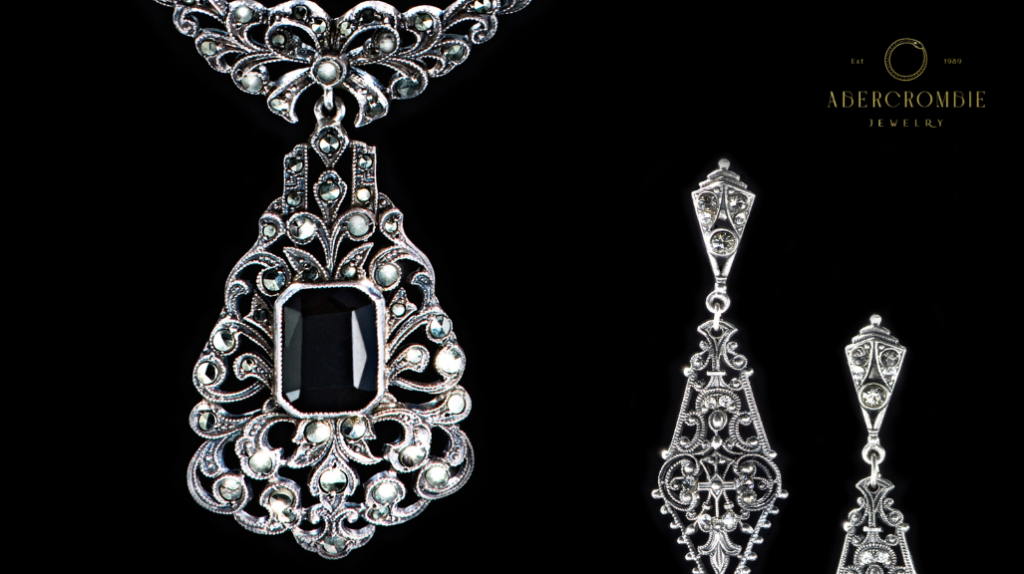
For antique jewelry, the situation is fundamentally different. An intact Victorian gold brooch, an Edwardian platinum ring with original milgrain, or a signed Art Deco bracelet with collector demand can be worth several times its melt value to the right buyer. A pawn shop offers melt, and we’ve verified this across hundreds of appraisals. A specialist who tracks the collector market offers something meaningful above that.
The piece’s collector value depends on several factors: the period and style, the condition and integrity of the original construction, whether any maker’s marks or signatures are present, and what comparable pieces are selling for in the current collector market. These aren’t factors a generic buyer can assess, and we’re direct about that. They require specific knowledge, and we maintain that contact actively.
Our antique jewelry evaluation team, which assesses period pieces for all of these factors before presenting any offer, gives you an accurate picture of what your piece is worth before you decide on anything.
Who Buys Victorian Jewelry
Victorian jewelry spans a long and varied period from roughly 1837 to 1901. Early Victorian pieces tend to be sentimental and romantic in their motifs, often featuring hair work, mourning themes, and naturalistic forms in yellow gold. Mid-Victorian pieces show more dramatic goldwork with archaeological revival designs and heavy naturalistic motifs. Late Victorian jewelry is lighter and more feminine, often in platinum, diamonds, and pearls.
The buyers for Victorian jewelry are collectors who specifically seek the period, estate dealers, and auction bidders with knowledge of the category. At our showroom, we evaluate Victorian pieces for construction integrity, condition, maker’s marks, and period authenticity before any offer. A Victorian piece that’s been heavily repaired or altered may trade closer to melt. An intact example with original construction in strong condition commands a collector’s premium.
Who Buys Edwardian Jewelry
Edwardian jewelry from roughly 1901 to 1915 is characterized by platinum, diamonds, pearls, and delicate lace-like construction enabled by platinum’s strength. Milgrain edges, open filigree work, and garland motifs are hallmarks of the period. These pieces are highly collectible in their original state, and they’re often the most rewarding to evaluate.
The collector market for Edwardian platinum jewelry is active, and we track it. An intact Edwardian ring with original filigree and a high-quality old European-cut diamond can be worth substantially more than its platinum-and-diamond melt value. The period, the construction, and the condition together determine the collector premium.
Our estate antique buying team, who regularly handle Edwardian collections from Austin estate clearances, assess the collector market premium before making any offer on pieces from this period.
Who Buys Art Deco Jewelry
Art Deco jewelry from roughly 1920 to 1935 is among the most actively collected categories of period jewelry globally. Bold geometric designs, strong color contrasts, platinum and white-gold settings, and calibrated-cut colored stones characterize the best examples. Signed pieces from Cartier, Van Cleef, and other major Deco houses command significant auction premiums.
For unsigned Art Deco pieces, the offer depends on the design quality, the completeness and integrity of the construction, and the quality of the center stone, if present. Our antique diamond evaluators, who assess old European cut and old mine cut diamonds that are characteristic of Art Deco jewelry against collector demand for those specific cuts, give you the stone value separately from the mounting value.
Who Buys Mid-Century and Retro Jewelry
Mid-century jewelry from the 1940s through the 1960s, including the Retro period of the 1940s and the modernist jewelry of the 1950s and 1960s, has seen increasing collector interest. Bold gold pieces with large colored stones, architectural abstract forms, and the period’s distinctive aesthetic attract buyers who specifically collect this era.
Our vintage jewelry evaluation team, which assesses mid-century and Retro pieces for design integrity and collector market value, evaluates these pieces against what buyers are paying for well-preserved examples in the current market.
Signed and Designer Antique Jewelry
Maker’s marks and designer signatures add a separate layer of value to any antique piece. Cartier, Tiffany, Marcus, Lalique, Fouquet, and dozens of other makers from the Victorian through mid-century periods produced signed pieces that command premiums far above comparable unsigned examples.
We evaluate every piece we see for maker’s marks, assay stamps, and signatures. If a piece carries a significant maker’s mark, that’s assessed as part of the offer before any number is presented. If we find a mark we can’t identify on-site, we’ll research it before completing the evaluation.
What to Bring and What to Expect
Bring the piece as-is. Don’t clean antique jewelry before an evaluation, and we can’t emphasize this strongly enough. Cleaning can remove patina that carries collector value and can damage delicate construction. Bring any documentation you have: prior appraisals, estate paperwork, receipts, or family history about the piece. None of this is required, but it helps.
The evaluation of an antique piece takes longer than a modern gold piece because we’re assessing construction, condition, period authenticity, and collector market value rather than just weighing. Allow 20 to 30 minutes for a single piece and more for collections.
For estate collections that include antique jewelry alongside watches, our watch buying team.
For antique jewelry alongside diamond rings or other estate pieces, our ring evaluation team. For pieces that may be better suited to consignment with a collector buyer than an immediate sale, our antique consignment program is for that category.
For formal written appraisals of antique jewelry for insurance or estate documentation, our antique jewelry appraisal, available by appointment, is separate from the complimentary verbal evaluation every client receives.
Practical Information Before You Visit
We see antique jewelry from Austin clients every week. The most common situations are estate clearances from established Austin families, collections brought in by heirs who inherited pieces they don’t know how to value, and clients who bought antique pieces over the years and are now downsizing.
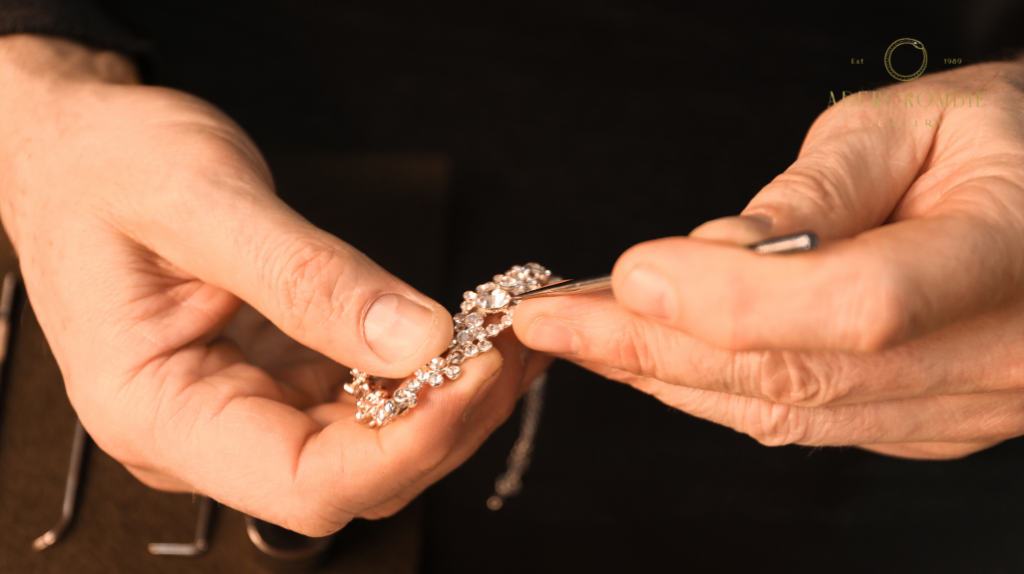
In every case, the process is the same: we examine the piece, identify the period and any maker’s marks, assess the condition and construction integrity, check what comparable pieces are selling for in the current collector market, and present an offer that reflects all of those factors. We explain what we found and why it affects the offer before presenting any numbers.
Walk-ins are welcome during regular business hours, Monday through Thursday, 10:00 to 5:30, and Friday, 10:00 to 5:00. Our gold evaluation team. For large estate collections with antique jewelry, calling ahead at (512) 328-7530 ensures we have enough time to properly evaluate everything.
Ready to Have Your Antique Jewelry Evaluated?
Walk-ins are welcome at our Westlake showroom Monday through Thursday, 10:00 to 5:30, and Friday, 10:00 to 5:00 at 3008 Bee Caves Rd, Suite 100. We’ve been evaluating and purchasing antique jewelry from Austin clients and estates since 1989. For significant collections or pieces that require extended evaluation, calling ahead at (512) 328-7530 is recommended. Bring the piece as-is, bring any documentation you have, and we’ll take it from there. There’s no charge for the evaluation and no obligation to sell.