
The best place to sell gold in Austin is a specialist jewelry buyer who tests on-site and prices it live. Our Abercrombie’s gold buying desk, which has purchased gold from Austin clients since 1989, gives you a same-day offer based on confirmed karat and the day’s actual spot price.
Why Where You Sell Matters More Than You’d Think
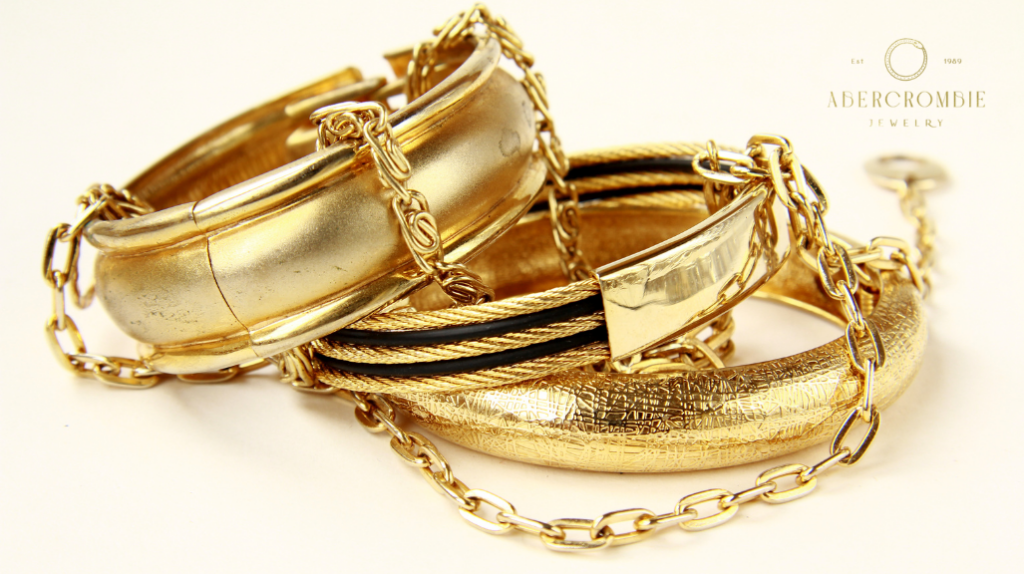
Gold is gold, but the amount you receive for the same piece can vary by 30 to 50 percent depending on where you sell it. That gap is real, and it’s driven entirely by the different business models buyers use.
A pawn shop needs a large margin because they hold inventory for an uncertain period before reselling. Their gold offer reflects that buffer. You’re not getting a bad deal because they’re dishonest; it’s that you’re paying for their carrying cost and uncertainty.
A cash-for-gold kiosk or mail-in service operates at high volume and low per-transaction margins. Convenience has a cost: these operations pay predictable percentages of melt regardless of what the piece actually is, and they have no incentive to identify collector or period premiums that might move the offer up.
An estate sale or auction works for full collections but requires time, incurs fees, and carries uncertain outcomes. The venue takes a percentage of the final price, the timing is unpredictable, and you won’t know your number until the sale closes.
A specialist jewelry buyer tests the metal directly, checks live spot pricing, and we offer a meaningful percentage of melt value the same day. The difference on a 5-gram 14K ring between a pawn shop and a specialist buyer can easily be significant, and on a large estate collection, it’s substantial.
What to Look For in a Gold Buyer
Before you go anywhere, ask a few questions:
Do they test the metal on-site? Any legitimate gold buyer tests the actual gold content rather than relying solely on the stamp. Stamps are reliable on most pieces but can be inaccurate on older or imported jewelry. Testing confirms what you actually have before any calculations are performed.
Do they show you the spot price? The spot price of gold changes every trading day. A buyer who calculated yesterday’s price or an internal average is paying you based on data different from the actual market. Legitimate buyers check live pricing and can show you the current rate.
Do they explain the calculation? The offer on gold is straightforward: weight in grams multiplied by the gold purity percentage, multiplied by the spot price per gram, and expressed as a percentage of that melt value. If a buyer can’t or won’t walk you through the math, that’s a signal to walk away.
Do they look at the whole piece? Gold jewelry isn’t always best evaluated purely by its melt. A Victorian gold brooch, a signed mid-century bracelet, or a European designer piece may be worth substantially more than its melt value to the right buyer. A buyer who only weighs and calculates is leaving money on the table, and we don’t do that.
Our same-day gold buyers, who meet all four of these criteria and explain every step of the evaluation, are available for walk-in appointments Monday through Thursday, 10:00 to 5:30, and Friday, 10:00 to 5:00.
What We Buy
We purchase gold across all categories and conditions. Gold jewelry in any karat from 10K through 24K is a core purchase. Broken chains, single earrings, worn rings, and bent pieces all retain their full gold content regardless of their wearable condition.
Gold coins are a separate category evaluated by our bullion and coin buyers, who distinguish numismatic collector value from pure melt value before making any offer. A gold coin that’s valuable to a collector receives a different offer than one priced solely by its metal content.
Gold, along with other metals in the same collection, is handled during a single appointment. Our silver and gold buying team, which evaluates silver in the same session as gold, and our gold and platinum team calculates platinum separately at live platinum spot pricing.
For collections that also include diamonds or other stones, the stones are evaluated separately from the metal, and both values are presented before any offer. Our gold ring resale team, who handle gold and diamond pieces in the same appointment, provide you with the stone value and the metal value separately.
What to Bring
Bring your gold as-is. You don’t need to clean it, sort it, or know anything about it beforehand. We sort and identify everything during the evaluation, and we explain what we find as we go. Tarnished, worn, or broken pieces sell for the same price as pristine ones; the gold content doesn’t change based on condition.
If you have documentation, a prior appraisal, an original receipt, or GIA certificates for diamond pieces, bring those too. They’re not required, but they help confirm our findings and can support stronger offers on significant pieces.
For estate collections, bring everything in one trip if possible. We evaluate gold, silver, platinum, diamonds, coins, and watches in a single appointment. You don’t need to sort by category or make separate trips.
When Collector Value Exceeds Melt Value
Several categories of gold jewelry regularly trade above their melt value, and only a specialist buyer reliably captures those premiums.
Antique gold. Victorian and Edwardian gold pieces, Art Nouveau jewelry, and Art Deco goldwork from the early 20th century carry collector demand above melt. Our antique collection buyers, who evaluate period goldwork against collector-market pricing rather than just weight, assess those premiums before making any offer.
Estate collections from established Austin families frequently contain pieces from these eras. Our estate gold collection team, which handles inherited lots across all metal categories in a single appointment, evaluates each piece individually rather than pricing the collection at bulk melt.
Signed designer pieces. Gold jewelry from Tiffany, Cartier, Van Cleef, and other major houses trades at premiums in the secondary market above pure gold value. The brand adds collector demand. Our specialist jewelry buyers, who assess designer pieces against secondary-market pricing, evaluate those premiums before making any offer.
How to Know If You’re Getting a Fair Offer
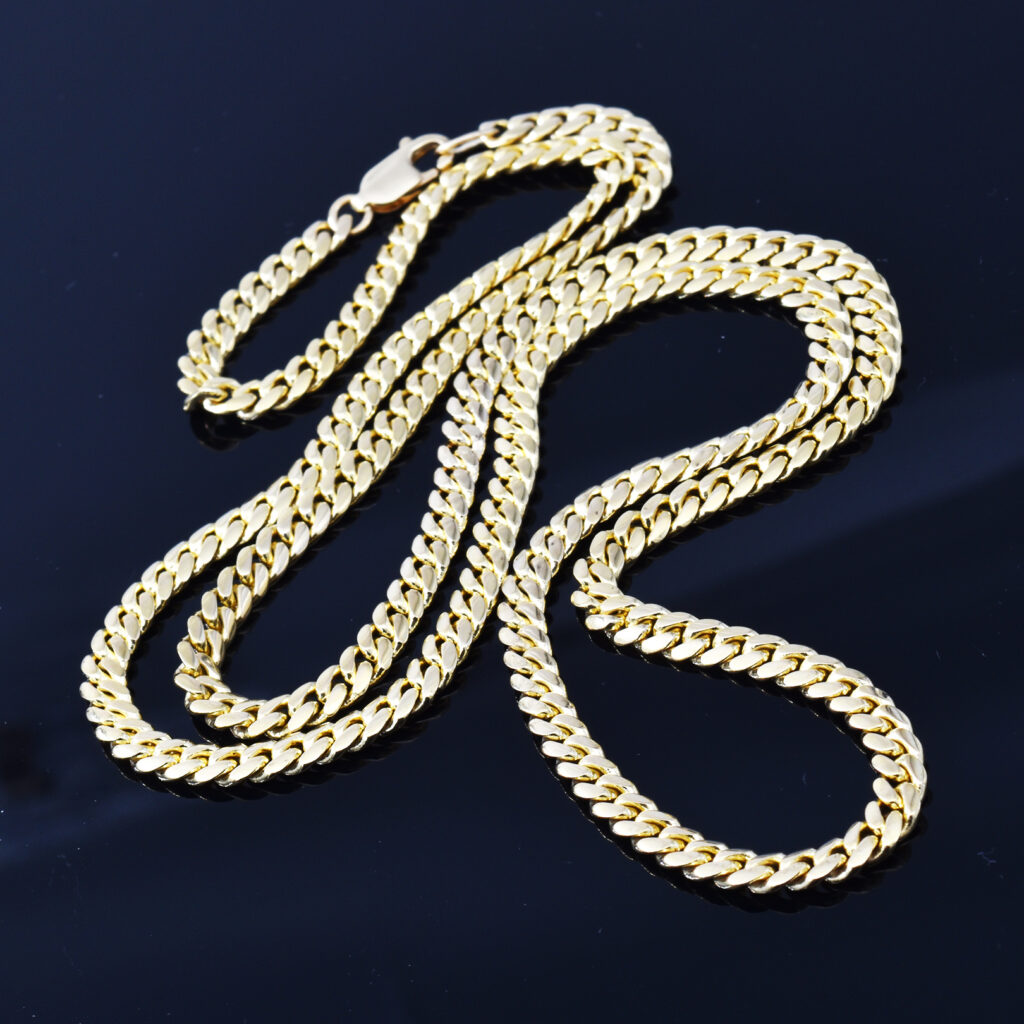
The melt value calculation gives you a baseline you can verify independently. Multiply the piece’s weight in grams by the gold purity percentage (14K = 0.583, 18K = 0.75), then multiply by the current spot price per gram, which you can find at any financial site.
Any legitimate offer should be a meaningful percentage of that melt value. If an offer is below 40 percent of melt without a clear explanation, that warrants a second opinion. If an offer claims to be above melt value without acknowledging the collector or designer premium, that also deserves scrutiny.
We always show the math, and we’d encourage you to check the spot price on your phone before coming in. You see the weight, the confirmed karat, the spot price, and the calculation before you hear the offer. If our numbers don’t match what you’ve calculated, ask us. The math should reconcile, and we’ll walk through it with you until it does.
For clients who need formal written documentation of their gold’s value for insurance or estate purposes, our gold documentation services, available by appointment at our Westlake showroom, produce certified written valuations separate from the buying evaluation.